desflow
Realistic event streams from a simulation you can steer while it runs.
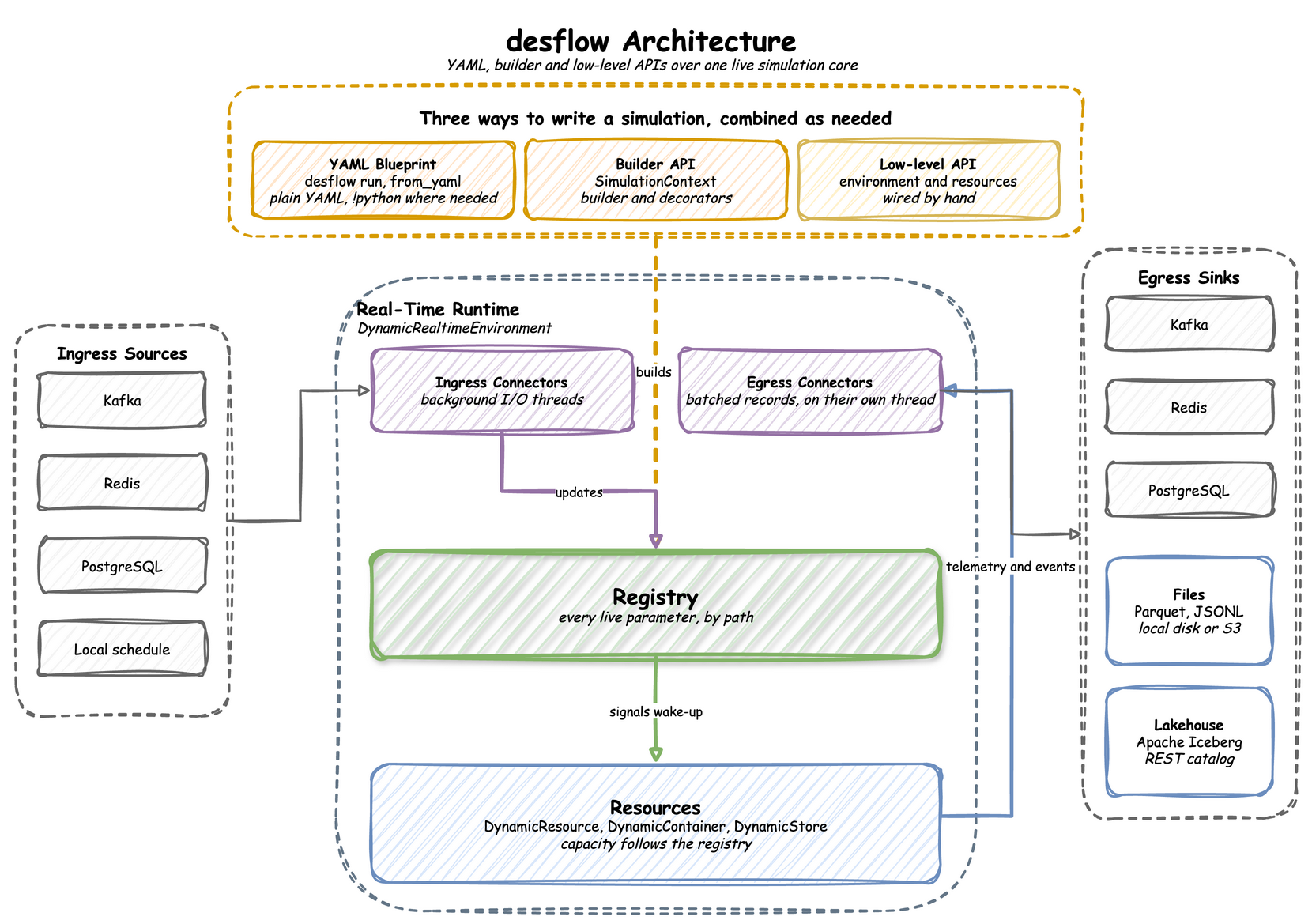
dynamic-des is now desflow. The package was renamed in 0.20.0: install
desflow, importdesflowand rundesflow. Code that importsdynamic_desand scripts that runddeskeep working with a warning until a later release, and the Changelog says what to change.
Most test data generators write random rows. desflow writes the events of a working process: orders queue for packers, packing slows down at busy times, and a backlog builds when arrivals outpace capacity. The data has the cause and effect of a real system, because it comes from a SimPy discrete-event simulation.
Change an arrival rate or a capacity while the simulation runs, from Kafka, Redis, PostgreSQL or a timed scenario, and the pipeline downstream sees the effect. One run can write a week of history at full speed, then keep streaming in real time.
Events and telemetry go to Kafka, Redis, PostgreSQL, Parquet or JSONL files (on local disk or S3-compatible storage), or Apache Iceberg tables. A model is a YAML file, a Python builder, or SimPy code.
Used for: testing streaming pipelines with data that behaves like production, demos and workshops, digital twins that follow live data, and training data for models that predict delays or load.
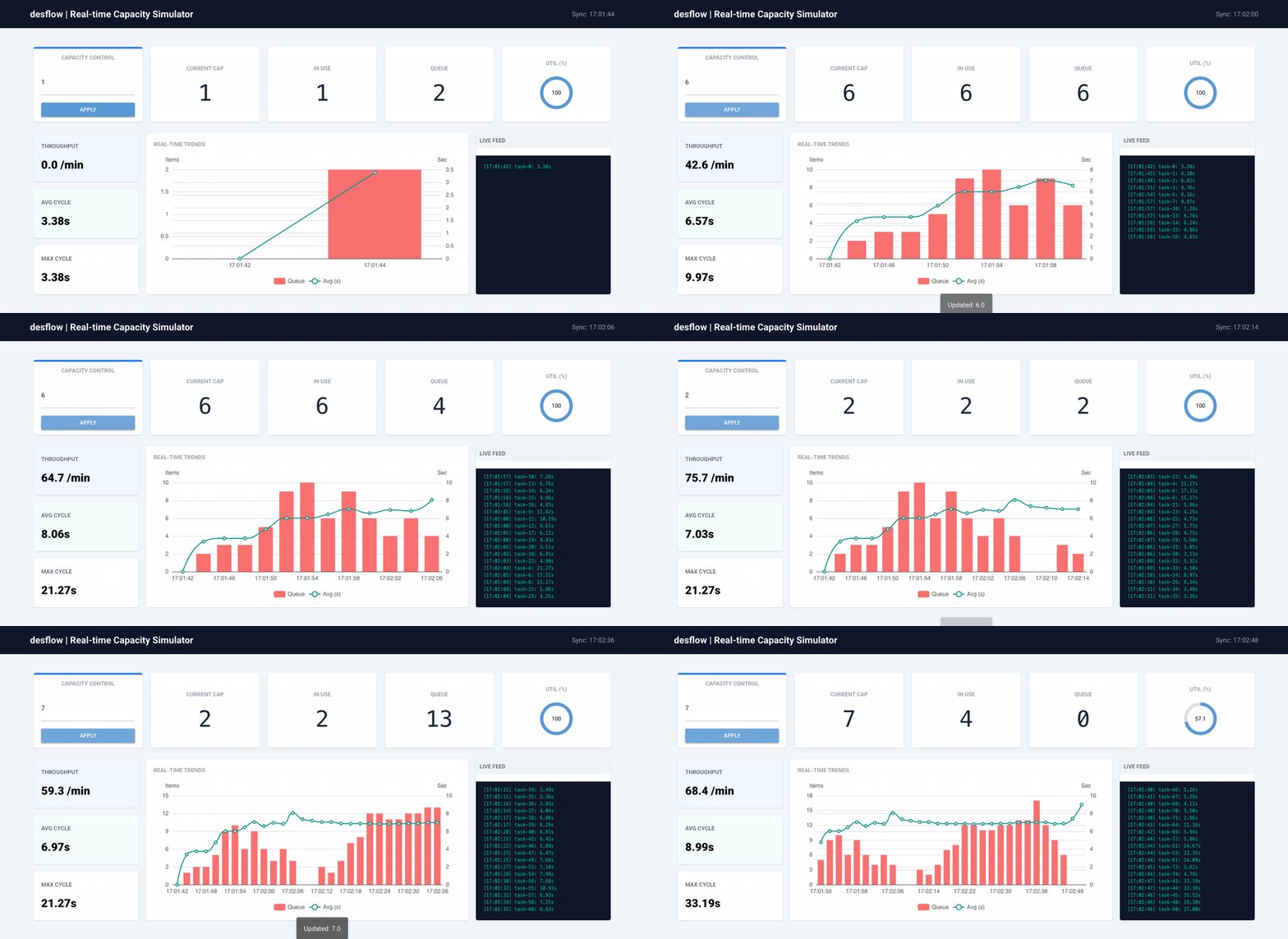
The control dashboard changes simulation parameters while a run is going, and the telemetry reacts without a restart:
Key Features
- Real time or full speed:
DynamicRealtimeEnvironmentruns SimPy in step with the system clock, or unpaced, and reports how far the simulation lags behind real time. - Live parameters: arrival rates, service times and capacities change mid-run through registry paths such as
Shop.arrival.orders.rate. A resource grows at once, and shrinks only as busy units are released, so no work in progress is lost. - Several sinks per run: each sink added with
add_egresshas its ownwhenfilter,batch_sizeandflush_interval, so one run can feed a stream and a data lake together. - Backfill then go live: one run generates backdated history at full speed, then switches to real time at
go_live_at. - Three ways to write a simulation: the low-level
DynamicRealtimeEnvironment, theSimulationContextbuilder, or a YAML blueprint run withdesflow run. - Serialisation: JSON through
orjsonby default, Avro through the Confluent or AWS Glue Schema Registry for chosen topics, and Pydantic models published as they are. - Kafka security: extra keyword arguments go to the Kafka client, so SASL, mTLS, OAuth and AWS IAM clusters work.