Spark
The spark-lite profile runs a Spark master, one worker and the Spark History Server. spark-full runs three workers. Spark's default catalog is iceberg, already pointed at the Iceberg REST catalog, so spark-sql reads and writes Iceberg tables with no extra settings. The commands below come from the end-to-end tests, which run them on every release, with the names changed.
| Endpoint | Address |
|---|---|
| Spark master UI from the host | http://127.0.0.1:9080 |
| Master URL from the host | spark://127.0.0.1:7077 |
| Spark History Server from the host | http://127.0.0.1:18080 |
Master URL inside the odctl network |
spark://spark-master:7077 |
Spark History Server inside the odctl network |
http://spark-history:18080 |
Run SQL against Iceberg
docker exec spark-master /opt/spark/bin/spark-sql -e "
  CREATE NAMESPACE IF NOT EXISTS iceberg.demo;
  CREATE OR REPLACE TABLE iceberg.demo.t (id BIGINT) USING iceberg;
  INSERT INTO iceberg.demo.t VALUES (1),(2),(3);
  SELECT count(*) FROM iceberg.demo.t;"
The query prints 3. The table is in the same catalog that Flink, Kafka Connect and Trino use, so Ingest into Iceberg shows the other engines writing to it.
See finished applications
Every Spark application writes an event log to /tmp/spark-events, which all Spark containers share. List the logs:
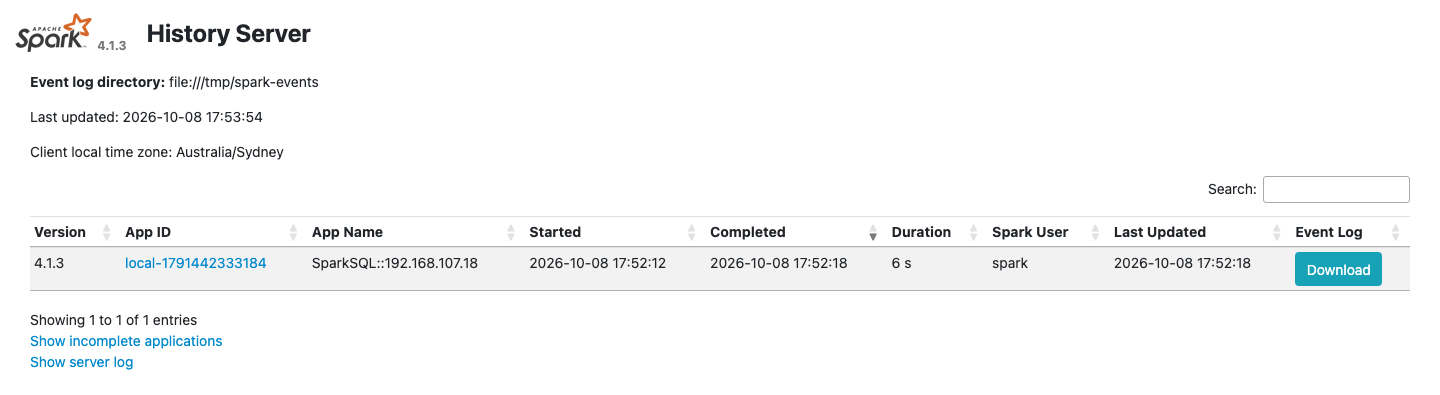
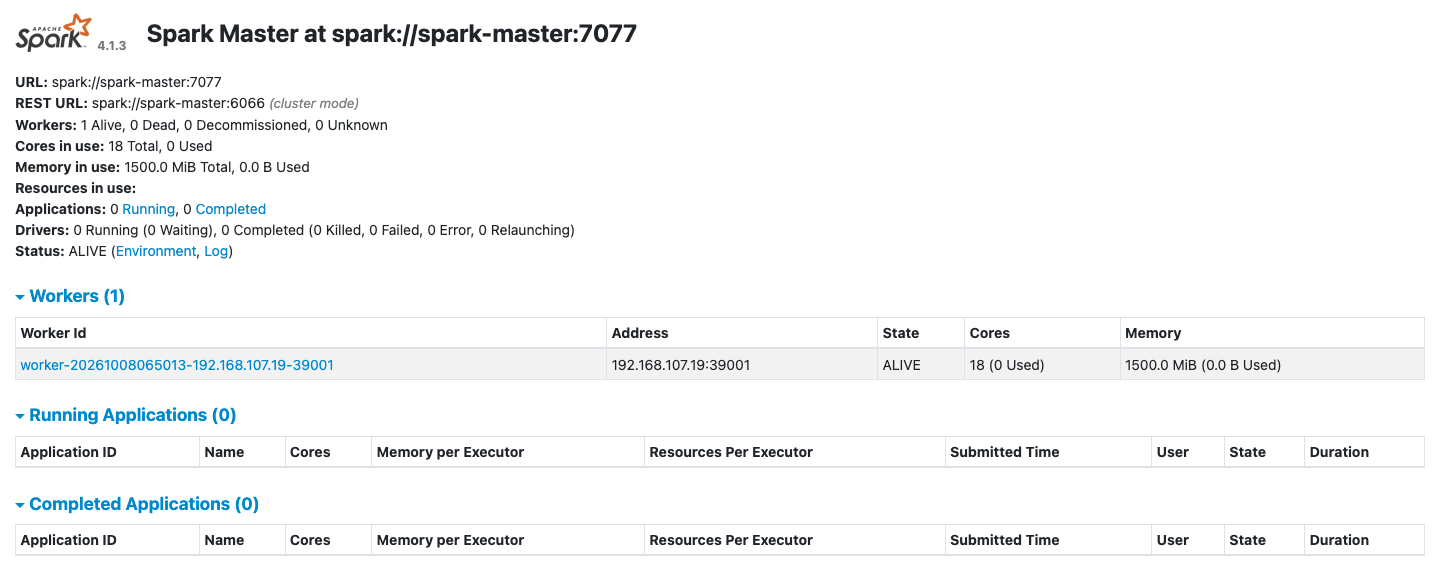
The Spark History Server at http://127.0.0.1:18080 reads the same directory, so the spark-sql run above appears there after it ends, with its jobs, stages and SQL plans. The master UI at http://127.0.0.1:9080 shows the workers and the applications the master has run.
The event logs are on a volume held in memory, so odctl down removes them.
The History Server lists the spark-sql run:
From another container
Inside the odctl network, submit applications to spark://spark-master:7077. Spark's settings, including the iceberg catalog and S3 access to SeaweedFS, are in spark/spark-defaults.conf in the workspace.