Temporal workers
The temporal profile runs the Temporal development server: the server, the Web UI and a SQLite database in one container. odctl runs only the server. Your own process runs the worker that executes workflows and activities. The code below comes from the end-to-end tests.
The gRPC endpoint is 127.0.0.1:7233 with the namespace default, and the Web UI is at http://127.0.0.1:8233.
A worker and a workflow
The activity fails on its first attempt, so the result shows that the retry policy ran it again.
import asyncio
from datetime import timedelta
from temporalio import activity, workflow
from temporalio.client import Client
from temporalio.common import RetryPolicy
from temporalio.worker import Worker


@activity.defn
async def greet(name: str) -> str:
    if activity.info().attempt < 2:
        raise RuntimeError("first attempt fails on purpose")
    return f"hello {name}"


@workflow.defn
class Greet:
    @workflow.run
    async def run(self, name: str) -> str:
        return await workflow.execute_activity(
            greet, name,
            start_to_close_timeout=timedelta(seconds=30),
            retry_policy=RetryPolicy(initial_interval=timedelta(seconds=1), maximum_attempts=3),
        )


async def main() -> None:
    client = await Client.connect("127.0.0.1:7233")
    async with Worker(client, task_queue="demo", workflows=[Greet], activities=[greet]):
        print(await client.execute_workflow(Greet.run, "odctl", id="greet-1", task_queue="demo"))


# The workflow sandbox imports this file again, so run main only as a script.
if __name__ == "__main__":
    asyncio.run(main())
Wait for an approval
A workflow can wait for a signal, for example a person approving an agent's action. The workflow below waits until its approve signal arrives, and then returns who approved it:
@workflow.defn
class Approval:
    def __init__(self) -> None:
        self.approver = None

    @workflow.signal
    def approve(self, approver: str) -> None:
        self.approver = approver

    @workflow.run
    async def run(self) -> str:
        await workflow.wait_condition(lambda: self.approver is not None)
        return f"approved by {self.approver}"
In main above, register it with the worker, start it, then send the signal:
async with Worker(client, task_queue="demo", workflows=[Greet, Approval], activities=[greet]):
    handle = await client.start_workflow(Approval.run, id="approval-1", task_queue="demo")
    await handle.signal(Approval.approve, "alice")
    print(await handle.result())
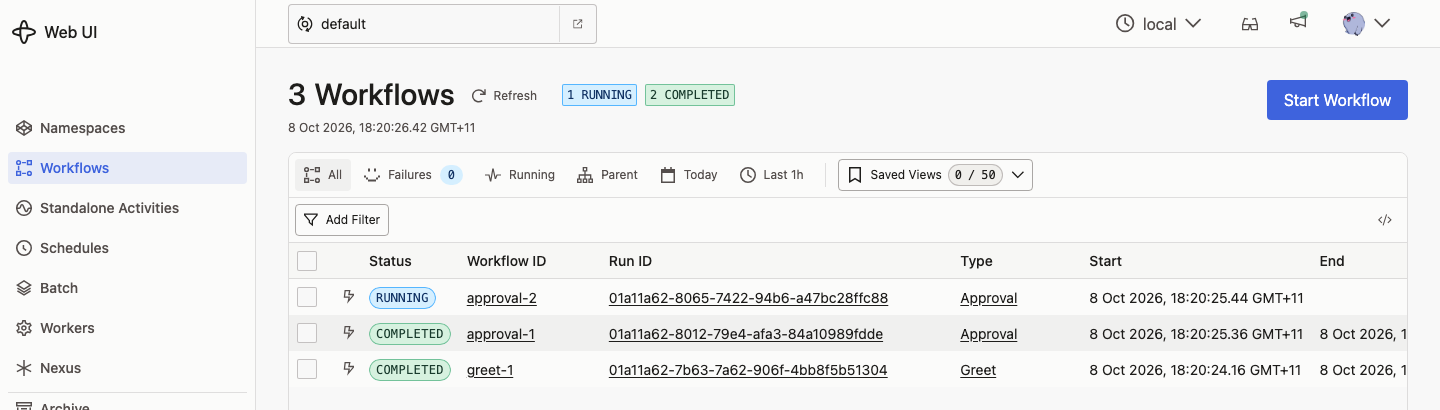
Until the signal arrives, the Web UI lists the workflow as running.
The Web UI at http://127.0.0.1:8233 lists each workflow. Here approval-2 was started without a signal, so it is still running:
History
Workflow history is in the database file inside the container. It survives odctl restart temporal, and the tests check that a workflow left waiting for its signal resumes and completes afterwards. odctl down removes the history, as it removes every odctl service's data.